top of page
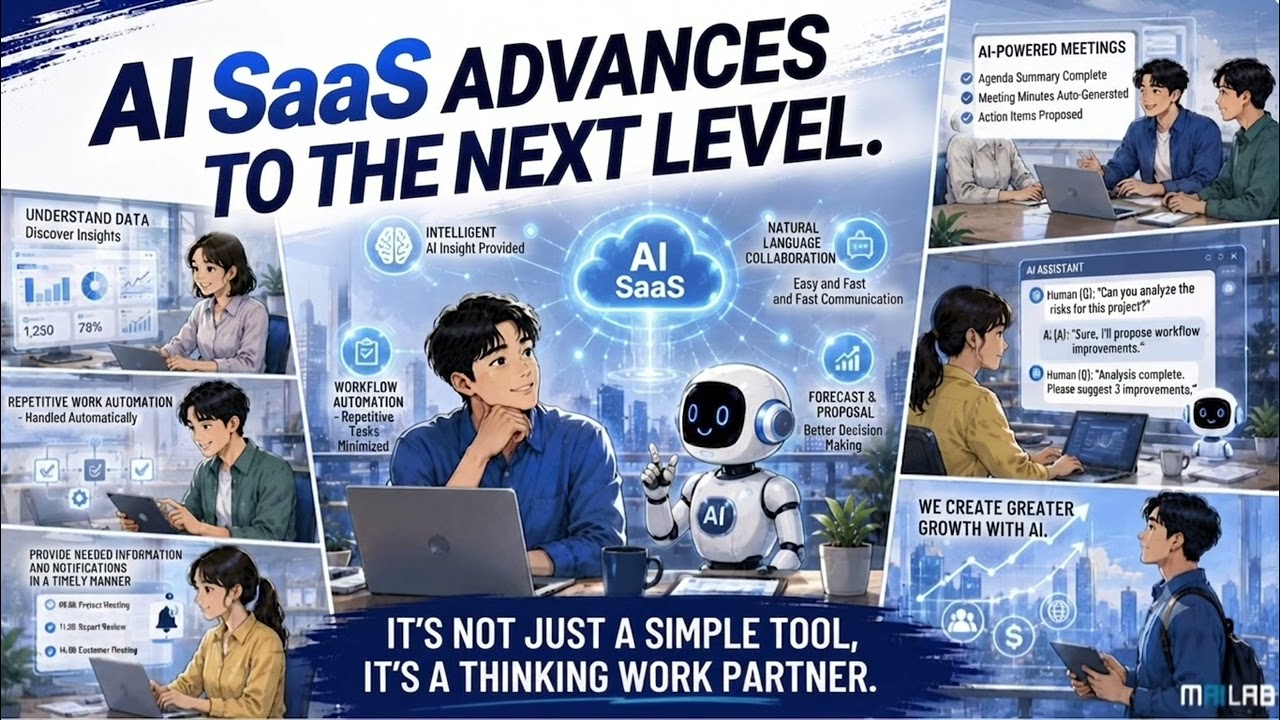
Do you still think SaaS is a complicated IT term?
“Do you still think SaaS is a complicated IT term?” The truth is, we already use SaaS every day. No complicated installation. No expensive equipment. No IT expert required. In the AI era, SaaS is no longer just technology—it is a digital assistant that anyone can use. In this card news, we cut through the complicated IT terminology and explain, at a glance, why SaaS is transforming the way we work and do business. It takes just one minute to read—and you’ll gain a clearer und
양필승
Aug 101 min read


양필승 AI시리즈 72. AI 시대, SaaS는 더 이상 소프트웨어가 아닙니다.
AI 시대, SaaS는 더 이상 소프트웨어가 아닙니다. 이제 SaaS는 고객의 문제를 스스로 분석하고 해결을 돕는 AI 서비스로 진화하고 있습니다. AI 고객관리, AI 회계, AI 마케팅 등 다양한 AI SaaS는 사람의 업무를 대신하는 것이 아니라 더 나은 의사결정을 지원하는 AI 파트너가 되고 있습니다. 앞으로 기업의 경쟁력은 누가 더 많은 사람을 보유했는지가 아니라,누가 더 효과적으로 AI SaaS를 활용하여 고객과 비즈니스의 문제를 해결하는가에 달려 있습니다. 이번 양필승 AI시리즈 72에서는 SaaS의 개념부터 AI SaaS가 가져올 업무 혁신까지 누구나 이해하기 쉽게 설명합니다. ▶ 영상 보기https://youtu.be/HTDhQzeGo1A #양필승 #메일랩 #MAILab #AI #ArtificialIntelligence #SaaS #EnterpriseAI #CloudComputing #DigitalTransformation #Bus
양필승
Aug 31 min read

AI Inflation Explained: The Hidden Cost of the AI Revolution
We often hear that AI will make us more productive and create enormous wealth. But before those benefits arrive, someone has to pay for the infrastructure that makes AI possible. The AI revolution is driving unprecedented investment in semiconductors, data centers, electricity, networking, software, and highly skilled talent. These costs are reshaping the global economy and may be contributing to higher prices across multiple industries. In this video, I explore why the risin
양필승
Jul 141 min read

The AI Boom Has a Price—You're Paying It
AI is transforming every industry—but its impact goes far beyond chatbots and intelligent software. Behind every AI model is an enormous physical infrastructure of data centers, semiconductors, power grids, and cooling systems. As this infrastructure rapidly expands, its costs increasingly affect businesses, consumers, and the global economy. In this short video, MAILab explores the hidden economic costs behind the AI boom—and why understanding them is essential for anyone fo
양필승
Jul 61 min read
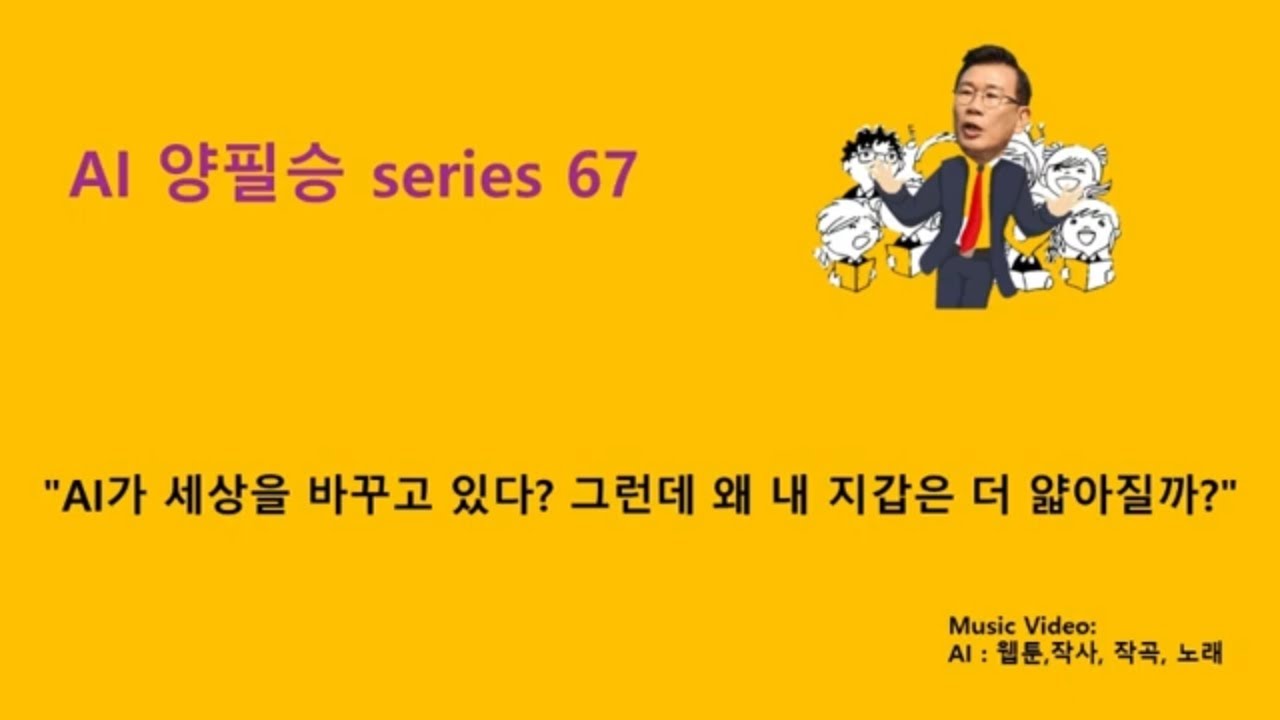
Dr. Phil Yang AI Series 67. Is AI Making Your Life More Expensive? The Hidden Cost of the AI Revolution
Artificial intelligence is transforming industries and improving productivity. But who is paying for that transformation? A recent Washington Post report highlights four ways AI is already increasing everyday costs for consumers: • Rising electronics prices • Higher electricity bills • More expensive AI software subscriptions • Increasing Mac mini prices driven by AI demand AI is undoubtedly reshaping the future. Yet the infrastructure, computing power, and energy required to
양필승
Jun 291 min read
양필승 AI시리즈 67. "AI가 세상을 바꾸고 있다? 그런데 왜 내 지갑은 더 얇아질까?"
Artificial intelligence is transforming industries and improving productivity. But who is paying for that transformation? A recent Washington Post report highlights four ways AI is already increasing everyday costs for consumers: • Rising electronics prices • Higher electricity bills • More expensive AI software subscriptions • Increasing Mac mini prices driven by AI demand AI is undoubtedly reshaping the future. Yet the infrastructure, computing power, and energy required to
양필승
Jun 291 min read
![[Card News] "AI Is Not a Game Changer"](https://i.ytimg.com/vi/8PrJgmRS1sA/hqdefault.jpg)
[Card News] "AI Is Not a Game Changer"
🎥 Watch this "card news" on "AI Is Not a Game Changer" Many people describe AI as a game changer. I believe that description is too small. A game changer alters who wins. AI changes the rules of the game itself. Like the Industrial Revolution and the Internet Revolution, AI is reshaping how we think, work, learn, create, and make decisions. This is not simply a technology shift. It is a civilization shift. Understanding AI only as a tool may cause us to miss the scale of the
양필승
Jun 221 min read
[Shorts] AI Is Not a Technological Revolution. It Is a Civilization Revolution.
🎥 Watch this YouTube Shorts by Dr. Phil Yang "AI Is Not a Technological Revolution. It Is a Civilization Revolution." Many people view AI as another technological breakthrough. I believe it is much more than that. AI is transforming how humans think, decide, create, and interact. It is reshaping the foundations of civilization itself. As AI becomes increasingly capable, the most valuable skill may no longer be information processing—but understanding people, values, and huma
양필승
Jun 221 min read

🎥 Dr. Phil Yang AI Series #66“In the Age of AI, Those Who Understand Humanity Will Win.”
🎥 Dr. Phil Yang AI Series #66 “In the Age of AI, Those Who Understand Humanity Will Win.” AI is not merely a game changer. It is a civilization changer. For the first time in history, AI is beginning to augment—and in some cases replace—human thinking itself. As AI reshapes decision-making across every sector, a critical question emerges: Where will human value come from? The answer may not lie in technology alone, but in the humanities. In the AI era, the ultimate competiti
양필승
Jun 221 min read
![[YouTube Shorts] Why AI Gives Different Answers to the Same Question](https://i.ytimg.com/vi_webp/3md0lZZUiJ8/oardefault.webp?usqp=CCk)
[YouTube Shorts] Why AI Gives Different Answers to the Same Question
We used to think computers were deterministic:same input, same output. But generative AI changed the rules. AI doesn’t simply calculate the “correct” answer. It generates possible answers based on probability. That’s why AI can sometimes be wrong…and sometimes surprisingly creative. The future belongs to people who understand uncertainty, context, and probabilistic thinking. AI is no longer a perfect calculator. It is an imperfect — but powerful — thinking partner. #AI #Gener
양필승
May 191 min read

Why Does AI Give Different Answers Every Time?It’s Not a Bug — It’s the Core of Generative AI
For decades, we viewed computers as deterministic machines: same input, same output. But generative AI changed that paradigm. AI now generates answers based on probability — not fixed rules. That’s why it can sometimes be inconsistent…and sometimes remarkably creative. Determinism creates reliability.Non-determinism creates possibility. The real issue may not be AI itself —but the outdated standards we still use to evaluate it. #AI #GenerativeAI #ChatGPT #LLM #ArtificialIntel
양필승
May 191 min read

🎬 Dr. Yang's AI Series 61 “AI Is No Longer a Perfect Calculator”
We used to think computers were deterministic machines:same input, same output. But generative AI changed the paradigm. The same question can produce different answers — not because the system is broken, but because it was designed to generate possibilities rather than retrieve a single fixed truth. That changes our role as well. We are no longer just users of AI. We are becoming interpreters of probability. The future may belong not to those who memorize answers, but to thos
양필승
May 191 min read

AI Won’t Eliminate Jobs — It Will Redefine Them
AI is not simply replacing people. It is restructuring the nature of work itself. According to Bill Gates, three fields will remain especially important in the AI era: ⚡ Energy — where real-world decisions impact safety and infrastructure 🧬 Biology — where creativity, hypotheses, and experimentation still matter 💻 Programming — where humans continue to build and control AI What’s disappearing is not necessarily jobs — but repetitive tasks. The future belongs to people who c
양필승
May 191 min read
![[Card News] The New AI Gap: Skill, Not Access](https://i.ytimg.com/vi_webp/L0rgc49fnVQ/oardefault.webp?usqp=CCk)
[Card News] The New AI Gap: Skill, Not Access
Why are some people creating new opportunities with AI, while others are becoming increasingly anxious about it? The difference is simple: not access to AI, but proficiency in using it. This card news breaks down the emerging divide in the AI era and explains why individuals, companies, and organizations must develop AI capabilities now — not later. AI is no longer limited to the tech industry. It is already reshaping how we work, compete, and grow. The gap between those prep
양필승
May 41 min read

Dr. Phil Yang AI Series Shorts “AI may be available to everyone, but the outcomes will not be equal.”
In the AI era, competitive advantage is no longer about access to information. It’s about the ability to use AI effectively. Even with the same AI tools, some people multiply their productivity, while others remain stuck in old ways of working. This short explores why a new divide is emerging in the AI era —and why building AI proficiency now matters more than ever. “AI may be available to everyone, but the outcomes will not be equal.” 🎥 Dr. Phil Yang AI Series Shorts #AI #G
양필승
May 41 min read
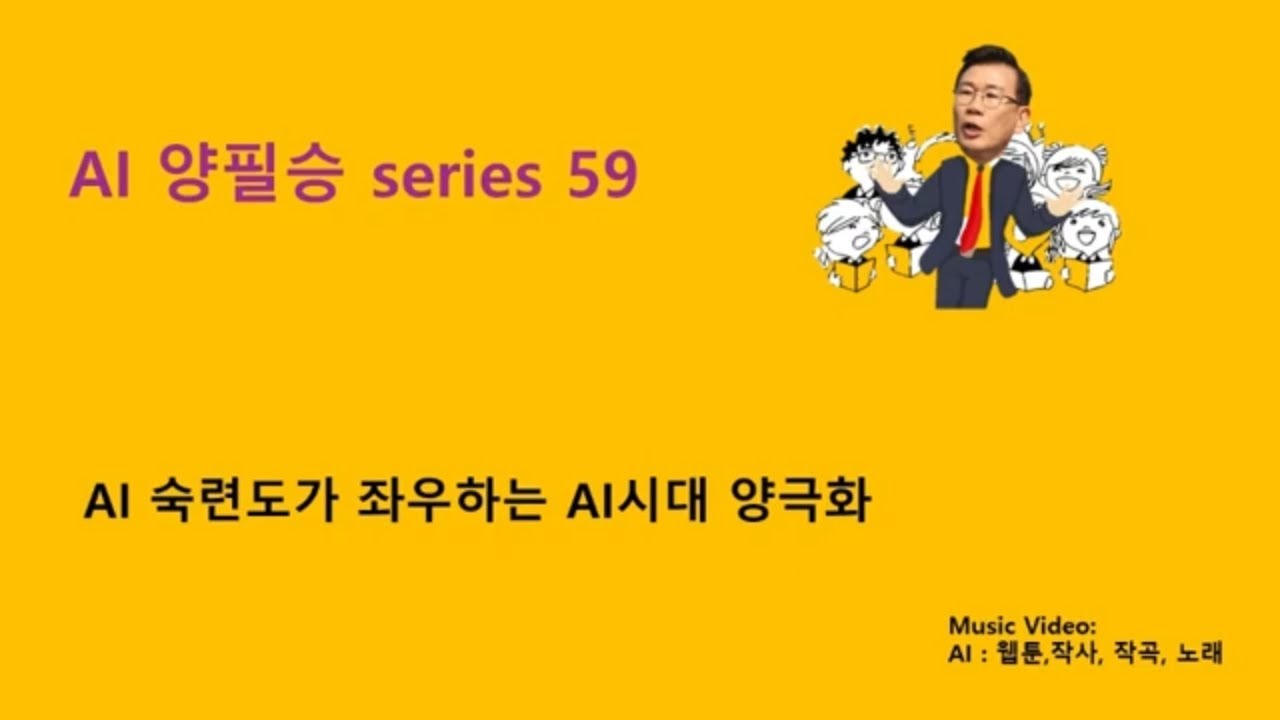
Dr. Yang's AI Series #59. “AI Polarization Driven by AI Proficiency”
MAILab CEO Dr. Phil Yang's AI Series #59 The AI divide is no longer a future problem. It has already begun. In “Dr. Yang's AI Series #59,” we explore a more important question than “Will AI take our jobs?” The real question is: Who will know how to use AI better? ✔ AI skill gaps are becoming performance gaps ✔ People using AI for 6+ months are already outperforming others ✔ AI is not just automation — it is a tool for expanding human thinking ✔ Those who fail to adapt risk re
양필승
May 41 min read
bottom of page