top of page
![[YouTube Shorts] Are we winning in AI — or just busy supplying it?](https://static.wixstatic.com/media/5d69fc_4462b6e624c84eecb9cf0de70f854881~mv2.png/v1/fill/w_577,h_433,fp_0.50_0.50,lg_1,q_35,blur_30,enc_avif,quality_auto/5d69fc_4462b6e624c84eecb9cf0de70f854881~mv2.png)
![[YouTube Shorts] Are we winning in AI — or just busy supplying it?](https://static.wixstatic.com/media/5d69fc_4462b6e624c84eecb9cf0de70f854881~mv2.png/v1/fill/w_577,h_433,fp_0.50_0.50,lg_1,q_95,enc_avif,quality_auto/5d69fc_4462b6e624c84eecb9cf0de70f854881~mv2.png)
[YouTube Shorts] Are we winning in AI — or just busy supplying it?
Are we winning in AI — or just busy supplying it? 👉 “You can sell chips, but you don’t gain sovereignty.” Even as semiconductors surge, the center of gravity in AI is shifting fast. Within an ecosystem shaped by NVIDIA, value is no longer in components alone, but in: 👉 Who controls the intelligence that acts in the real world This short clip captures the key question:Are we building the future — or just enabling someone else’s? 🎥 Watch the Shorts: https://youtube.com/short
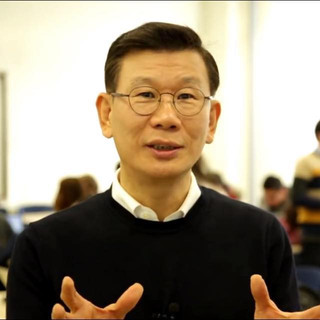
양필승
Mar 231 min read

Phil's AI Series 53. The Trap of Being #1 in Semiconductors — Will Korea’s AI Become a “Soulless Giant”?
👉 “You can sell chips, but you don’t gain sovereignty.” Today’s structure places Korea largely as a component supplier within an ecosystem led by NVIDIA. The real competition lies in: 👉 Software + Services + Physical AI Platforms It’s time to move beyond components and build intelligence that moves the real world. 🎥 https://youtu.be/HkhyO28Feig #AI #Semiconductors #PhysicalAI #EmbodiedAI #Robotics #KoreaAI
양필승
Mar 231 min read

Phil Yang AI Series 52. Tesla vs Hyundai—the real battleground in robotics isn’t muscle, it’s the brain
Tesla vs Hyundai—the real battleground in robotics isn’t muscle, it’s the brain. Boston Dynamics represents the peak of control engineering. Hyundai has the world’s best “body.”Tesla is building robots that understand the world . Rough around the edges, but capable of learning—will that be the real winner? 👇 Watch the video https:// www.youtube.com/watch?v=0XXU0zgdP2Y #AI #Robotics #Tesla #Hyundai #PhysicalAI #ArtificialIntelligence
양필승
Mar 171 min read


Why hasn’t the Boston Dynamics robot acquired by Hyundai made it into our homes yet?
Why hasn’t the Boston Dynamics robot acquired by Hyundai made it into our homes yet? #Hyundai #Robotics #PhysicalAI #AI
양필승
Mar 171 min read

Phil Yang AI Series 51. Enough with dancing robots. When will they do my dishes?
🤖 Enough with dancing robots. When will they do my dishes? What we really want isn’t a robot that does backflips—it’s one that cleans up after a long day and does the laundry. Boston Dynamics showcases incredible hardware, but for now, it’s closer to an “athlete without intelligence.” Hyundai is successfully deploying robots in controlled environments like car factories.But to step into the unpredictable “wild” of our homes, Physical AI software is the real key. We’ve seen e
양필승
Mar 171 min read

Why did Hyundai invest $1B in robotics? The reality of Physical AI
Samsung builds the brain (chips) . LG owns the space (smart home & appliances) . Hyundai is building the moving body (robot platforms). After acquiring Boston Dynamics , why has Hyundai been so quiet? The key may lie in VLA models + general-purpose intelligence. Recent leadership changes, including the CEO’s resignation, also raise an important question:What direction is Hyundai taking next? The future of AI isn’t just software —it’s AI that moves in the real world. We are en
양필승
Mar 91 min read
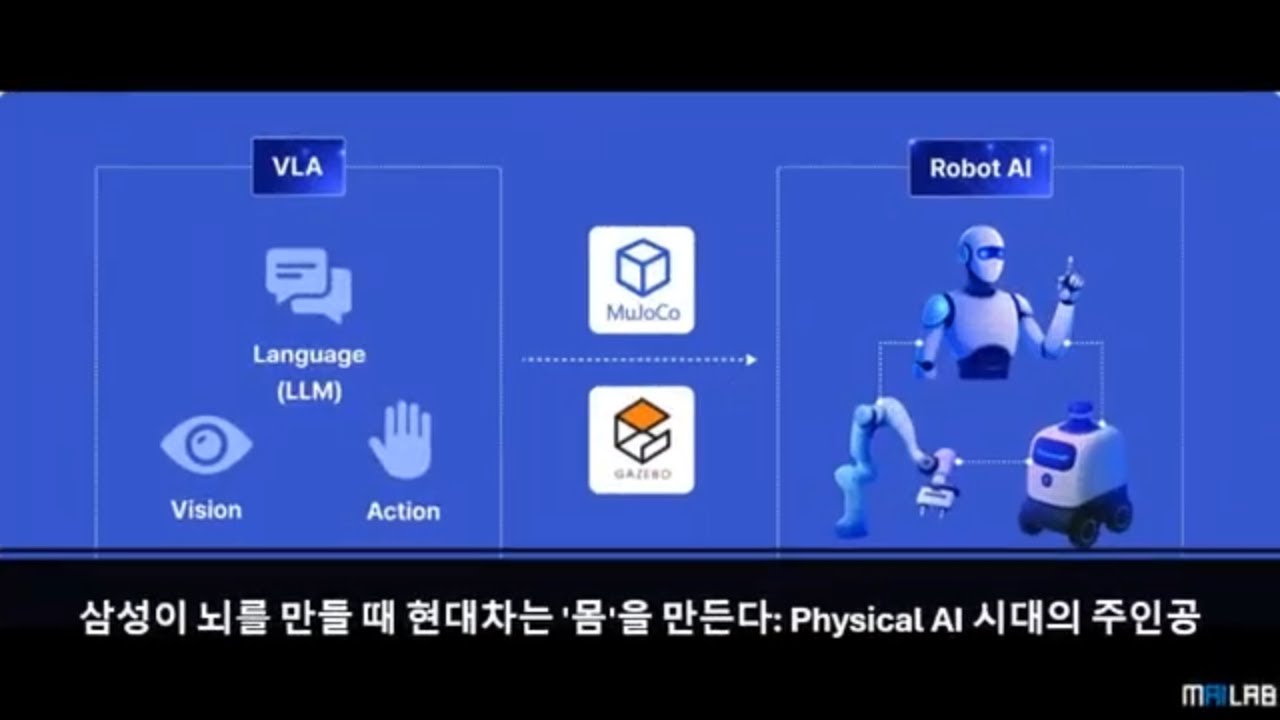
When Samsung builds the brain, Hyundai builds the body. AI is entering the Physical AI era.
The next phase of AI will not be decided by software alone. It will be about deploying intelligence into the physical world —robots, factories, mobility, and autonomous systems. Korea may have a unique advantage. • Samsung – advanced semiconductors and AI chips • Hyundai Motor Group – robotics, mobility, and physical platforms When the AI brain meets the robotic body , we move beyond digital intelligence to real-world intelligence . This could define the next chapter of gl
양필승
Mar 91 min read

“Korea is an AI laggard?”
“Korea is an AI laggard?” Really? While the U.S. writes novels with LLMs,we can move robotic arms with zero margin of error. The next AI battlefield isn’t on the screen. It’s in the real world. AI chips + sensors + robotics = Physical AI Korea shouldn’t just sell chips.We should export intelligent factories. It’s time to change the game. #PhysicalAI #KSemiconductor #AIstrategy #SmartFactory #Robotics #IndustrialAI
양필승
Feb 261 min read


AI Can Talk—So Why Can’t Robots Move Like Humans?
Why does AI feel intelligent in conversation, but robots still struggle with movement? The reason isn’t technological immaturity—it’s a difference in what is being automated . Intelligent AI operates in a probabilistic world and improves through human intervention. Physical AI (robotics) exists in a deterministic world, where safety requires strict control and minimal flexibility. Moravec’s Paradox reminds us that tasks humans find effortless—walking, grasping—are among the
양필승
Feb 91 min read

Dr. Phil Yang's AI Series 48. Conversational AI vs Physical AI: Why Don’t Robots Do What We Want?
Why does conversational AI feel so intelligent, while robots still struggle to move the way we want them to? In Dr. Phil Yang's AI Series, Episode 48 , we explore a fundamental distinction that often gets overlooked: “Automation of intelligence” vs. “automation of the physical world.” Intelligent AI operates in a probabilistic domain.When humans intervene—saying “this is wrong, try thinking this way” —the system adjusts probabilities and evolves. This process is often referr
양필승
Feb 91 min read
bottom of page